

A Digital Nomad’s Guide To Belgrade, Serbia
Thinking of being a Belgrade digital nomad? We spent a full month living in Belgrade as digital nomads checking it out and sharing all the details with you.
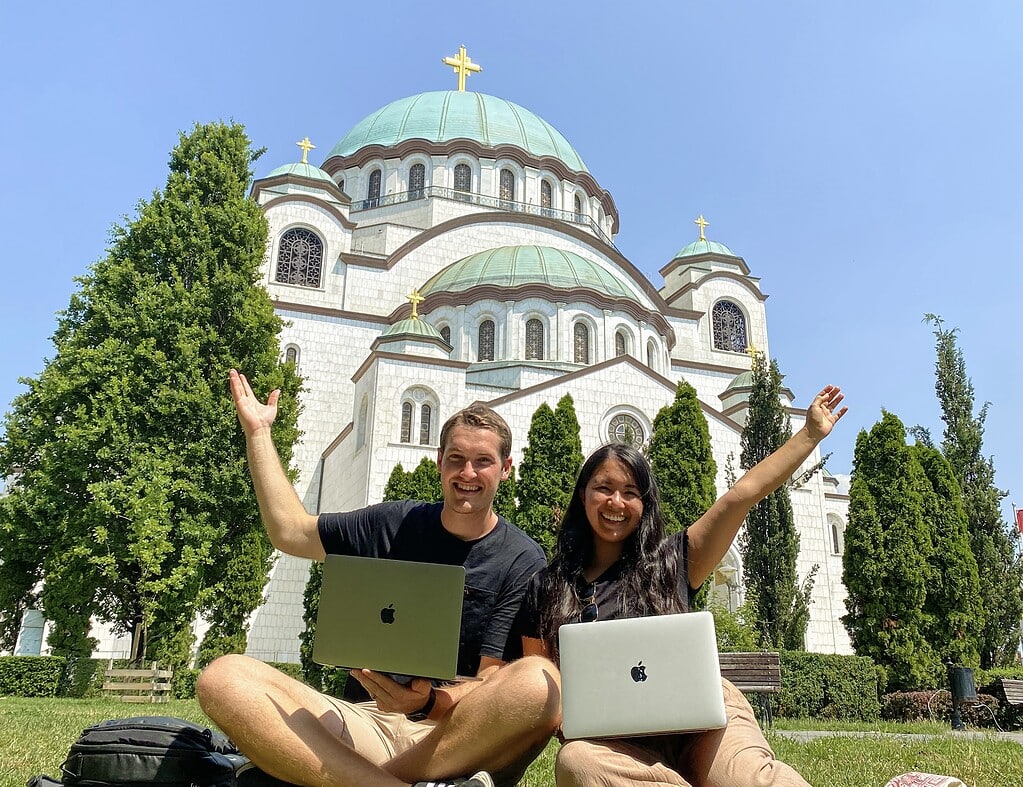
This article may contain affiliate links, meaning I make a small commission on any purchases at no extra expense to you. Read our disclaimer & privacy policy here.

Ashley Metcalfe
August 25, 2026
Belgrade is an underrated digital nomad destination in Europe. This city offers great value for money with a cost of living of $2,000 for a couple, a high quality of life, free public transport and fast wifi (138 Mbps). Most nationalities can stay in Serbia visa-free for 90 days and doesn’t count toward your Schengen days.
It’s not the first place people think of when traveling full-time but once you experience it for yourself, you’ll wonder why you didn’t visit sooner.
We spent a full month living in Belgrade as digital nomads checking out all this city has to offer.
So we are spilling the beans on all of it, the cost of living, community, workspaces and everything you need to know.
And you know what…
…Belgrade surprised us! It’s walkable, affordable and packed with things to do, but it’s still flying under the radar compared to Lisbon or Budapest.
In this guide, you’ll get our honest review of Belgrade for digital nomads. The best neighborhoods, real costs we paid, where to work, how to get around and whether it deserves a spot on your travel list.
Let’s jump in!
Our Experience As Digital Nomads In Belgrade
We loved living in Belgrade as digital nomads. It was our first time visiting Serbia, we weren’t really sure what to expect. It got us wondering if we made the right decision.
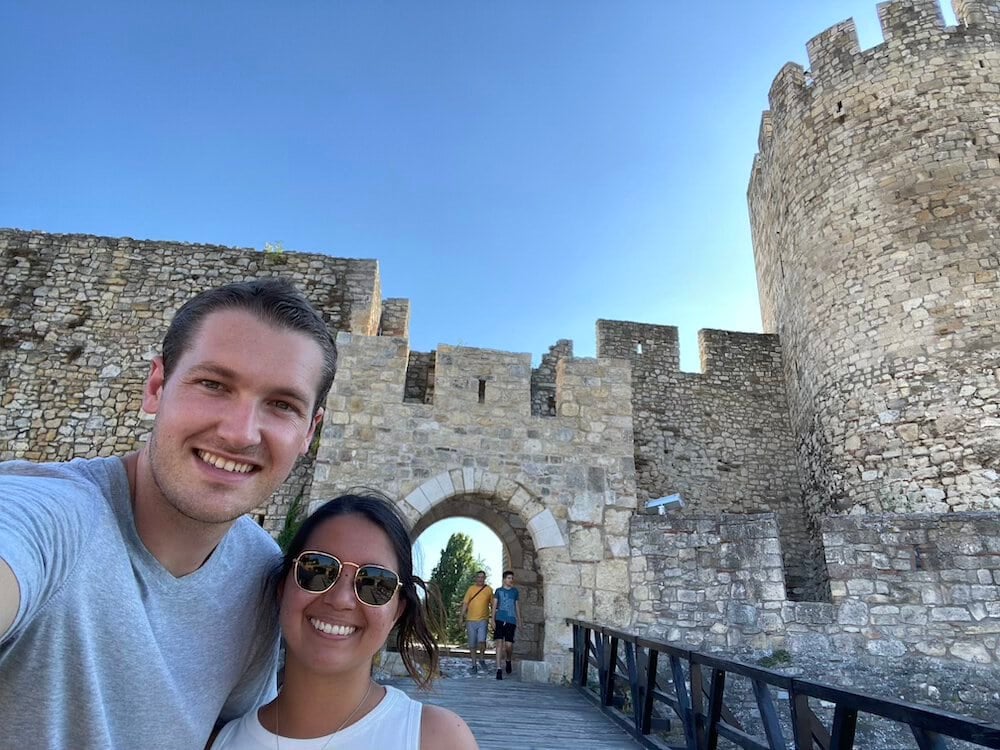
Could we actually live here, hit work deadlines, stay fit and enjoy the city at the same time?
Spoiler alert: yes.
We loved how walkable the city is. Our apartment, coffee shops, restaurants, the gym and the Belgrade Fortress were all within 20 minutes on foot. The locals were some of the friendliest we’ve met in Europe, and the food scene punches well above its price tag.
The downside?
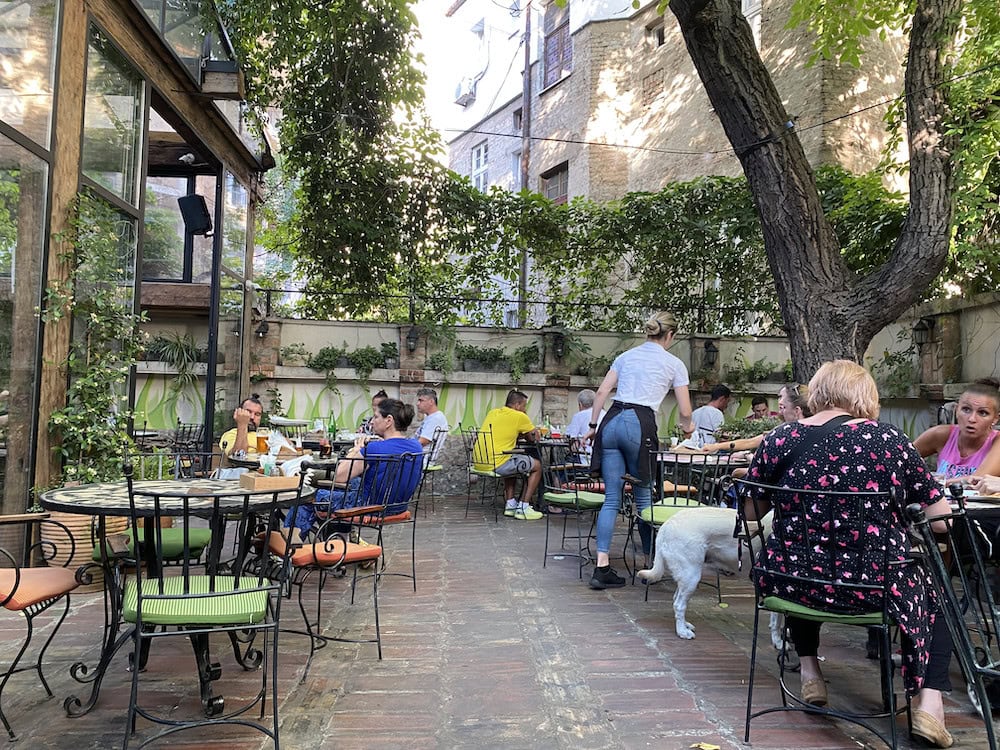
The digital nomad community is still small. We met plenty of travelers but very few people actually working remotely, and coworking options are limited compared to bigger nomad hubs.
So why is Belgrade gaining popularity with nomads?
Simple. It’s cheaper than Western Europe, it sits outside the Schengen Area (so it doesn’t burn your 90 Schengen days), the wifi is fast and the city has real energy.
Here’s our full rating of Belgrade across every category:
TTA Belgrade Review
🏡 Quality of life: ★★★★★
💰 Cost of living: ★★★★
👮🏻 Safety: ★★★★
🌤️ Weather: ★★★
🛜 Wifi Speeds: ★★★★★
👩🏻🤝👩🏽 Community: ★★
🏄🏻♀️ Activities: ★★★★
Total Score: ★★★★/5
We rate Belgrade 4 out of 5 stars for digital nomads based on quality of life, cost, safety and things to do. That community score is the only thing holding Belgrade back from top marks. Everything else delivers.
Living In Belgrade As Digital Nomads (Ultimate Guide)
Living in Belgrade as a digital nomad is affordable, safe and easy to settle into. The city gives you fast internet, cheap food, free public transport and a walkable center packed with cafes you can work from.
We’re sharing everything we know and experienced below!
Best Neighborhoods For Digital Nomads (Where To Stay In Belgrade)
Where you stay makes or breaks your month in Belgrade.
The best neighborhoods for digital nomads in Belgrade are Dorćol, Stari Grad, Vračar, Savamala and Zemun. Each one offers walkability, cafes to work from and easy access to the city center.
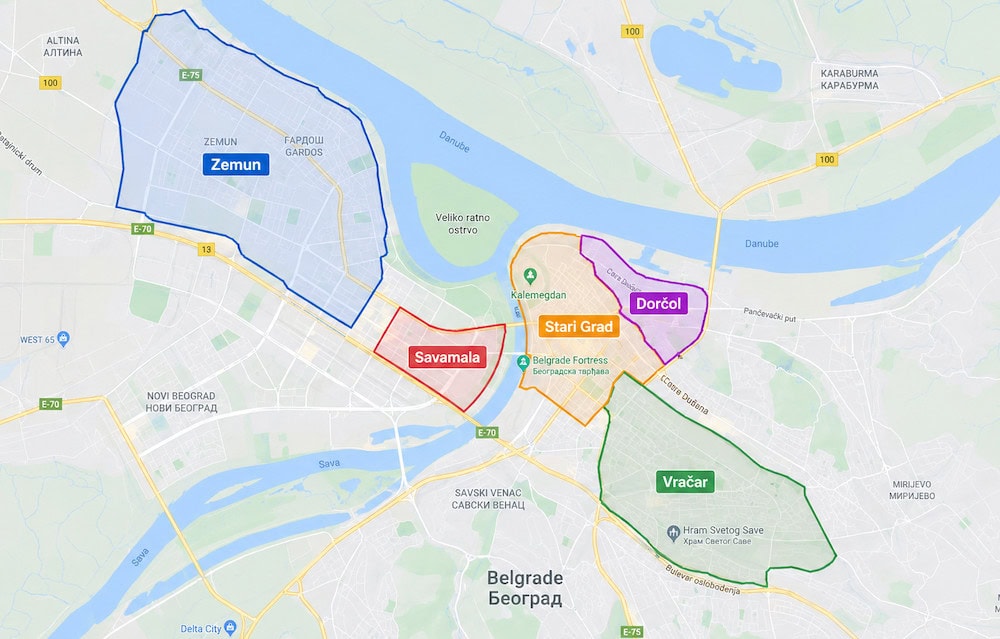
Here are the 5 best areas and the trade-offs of each:
1. Dorćol
Dorcol is walking distance to everything, packed with cafes and restaurants, local feel, very safe, more affordable than the main tourist area. You’re close to the Old Town but far enough away that you don’t feel like a tourist. The only con is that some apartment quality varies and the buildings are typically older.
2. Stari Grad (Old Town)
This is the most central area to stay in Belgrade. The historic center with Knez Mihailova street, Republic Square and most major sights on your doorstep. The only thing is that it’s very touristy and possibly the most expensive area to book accommodation. It also gets crowded in the summer time.
3. Vračar
Vračar is one of the areas we looked at. It’s an upscale residential area around the Church of Saint Sava, full of chic cafes, leafy streets and quality apartments. It is slightly pricier for accommodation and unfortunately it’s a bit of a hike (20-30 minute walking distance) to the Old Town every time.
4. Savamala
Savamala is the creative riverside quarter with street art, design hubs and easy access to the Belgrade Waterfront promenade. However it sits near nightlife areas, so weekends can get noisy. Unless you’re into that kind of thing.
5. Zemun
Zemun is a charming old Austro-Hungarian town on the Danube with a relaxed pace, riverside restaurants and cheaper rent. It’s very far from the Old Town, a 20-30 minute ride from the city center, which gets old fast if your life happens downtown.
Where We Personally Stayed In Belgrade:
We stayed in Dorćol and it was the right call.
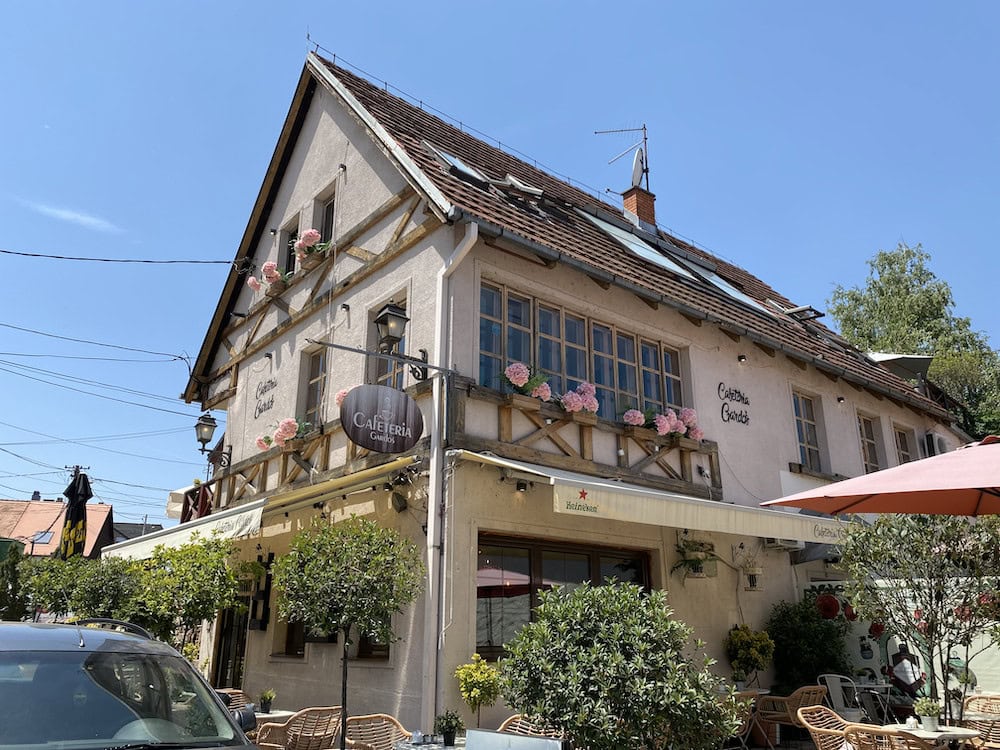
We were walking distance to loads of restaurants and cafes to work from, like Kafeterija Dorćol. The city center, the Belgrade Fortress and Studentski Park were all an easy walk away.
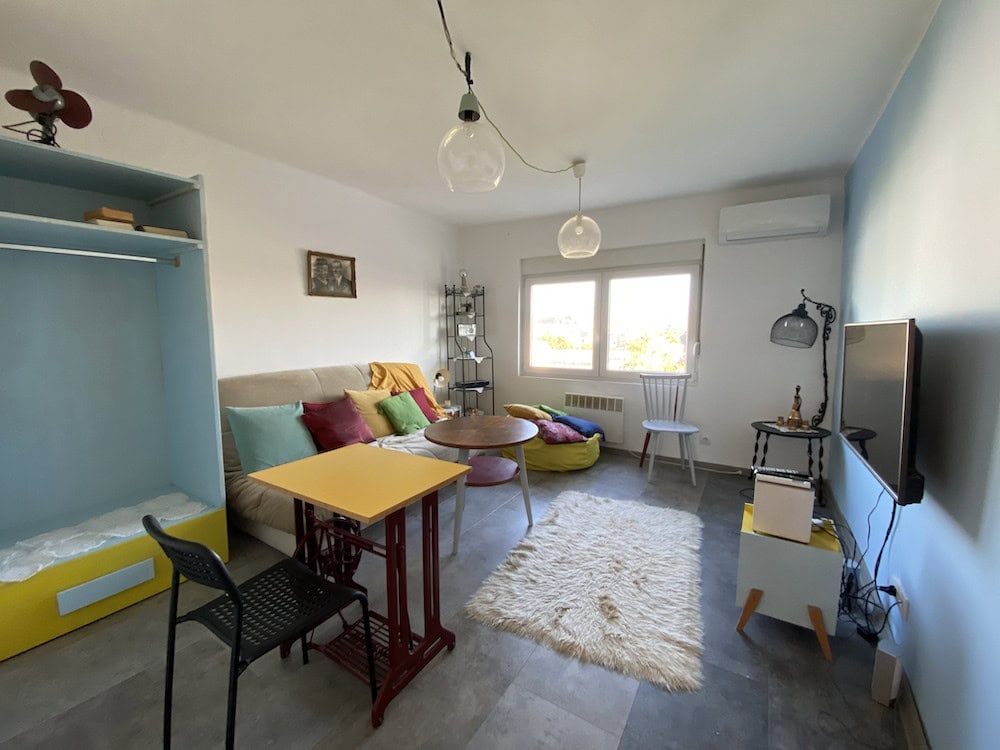
It’s slightly more local than Stari Grad but still very safe, very affordable and perfect for digital nomads. Our favorite coffee shop, Pržionica, was close by too. If you’re a coffee lover, it’s a must visit.
Where To Avoid Staying In Belgrade For Digital Nomads?
Digital nomads should avoid booking accommodation in Karaburma, Borča and the outer blocks of New Belgrade. These areas aren’t dangerous, but they’re inconvenient, far from cafes and coworking, and poorly suited to a nomad lifestyle.
The rule is simple: stay on the old town side of the river, within walking distance of Knez Mihailova, and your month will be ten times better.
Best Time To Visit Belgrade For Digital Nomads
Timing matters more in Belgrade than in most cities.
The best time to visit Belgrade for digital nomads is May to September, when temperatures sit between 68°F to 90°F and the city moves outdoors. The shoulder seasons of May, June and September offer warm weather without peak summer heat.
Here’s why:
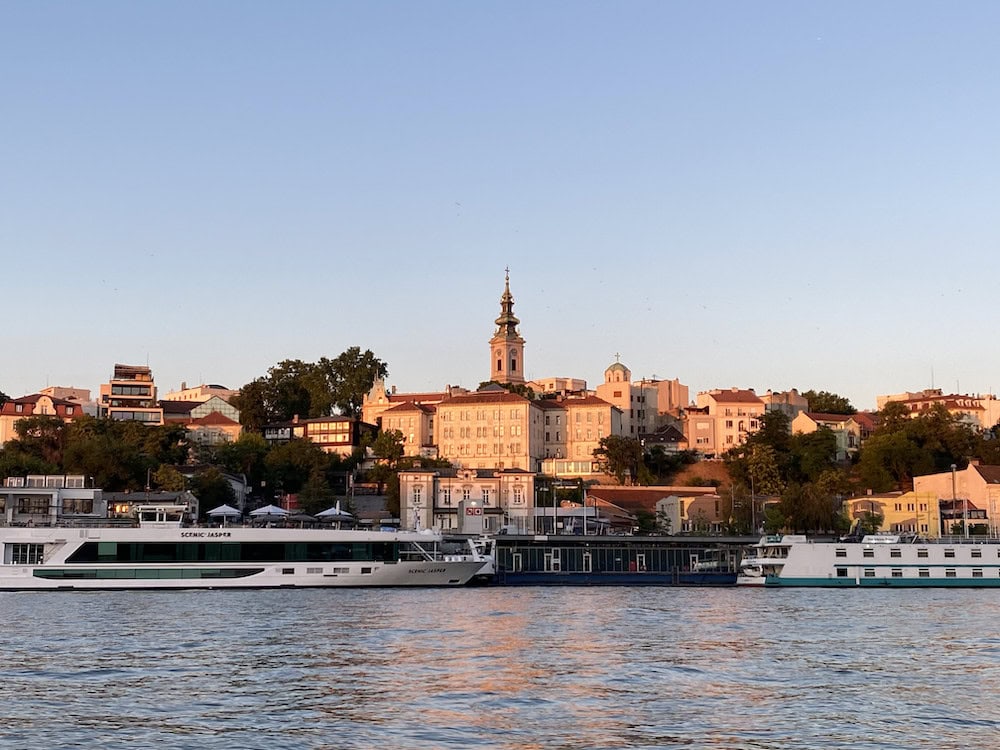
In late spring and summer, Belgrade transforms. Cafe terraces spill onto the streets, the riverbanks fill with floating bars and restaurants, Kalemegdan park becomes an evening hangout and the whole city feels alive.
The worst time to visit Belgrade is winter, from December to February.
Temperatures drop to freezing, the skies turn gray for weeks and Belgrade’s winter air quality is a known problem, with pollution regularly flagged by nomads who’ve spent winters there. The outdoor lifestyle that makes the city special disappears.
Our experience?
We visited in summer, specifically June and loved it. Long warm evenings, dinners in Skadarlija, walks along the Sava promenade and sunset views from the fortress almost every night.
If you can pick your month, pick June or September. You get all the summer energy without the July or August heat spikes.
Cost Of Living For Digital Nomads In Belgrade
The cost of living in Belgrade for a digital nomad is around $1,300 to $2,000 USD per month for a single person, including rent. For a couple, $2,200 to $2,500 USD combined is more than reasonable to live comfortably in Belgrade as nomads.
Belgrade is one of the cheapest capital cities in Europe for the quality of life you get.
Let me break it down for you:
Your biggest cost is accommodation. A furnished 1-bedroom Airbnb for a month stay costs around $1,250 USD in a nice central area. We found ours through the platforms in our guide to the best digital nomad accommodation sites.
Groceries, eating out, gyms and coworking are all affordable by Western standards. And public transport (if you end up using it) costs you very little.
Here’s our personal cost of living and the real prices we paid:
- 🚋 Public transport (bus, tram, trolleybus): $0 (it’s FREE)
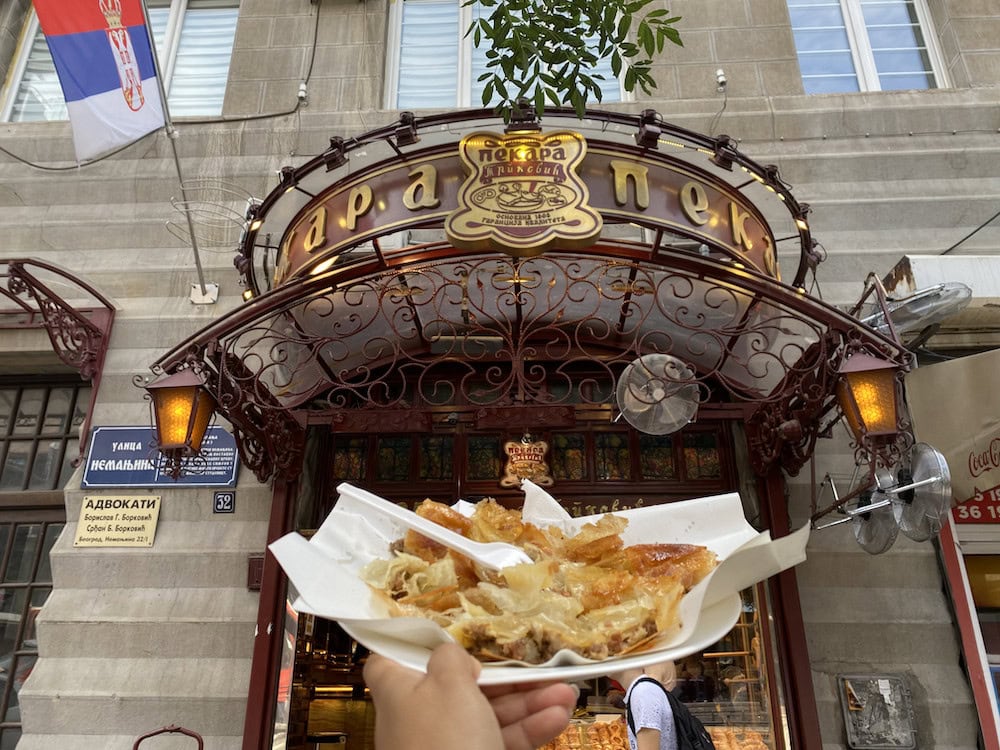
- 🥮 Street food (burek): €1.20 to €3.80 ($1.30 to $4.10 USD)
- 🍳 Brunch Meal: €25 for 2 meals + 2 coffees ($27 USD)
- 🥗 Standard Restaurant Meals: €11 to €22 ($12 to $24 USD)
- 🚕 Taxi ride (10-minute ride): €2 to €5 ($2.20 to $5.40 USD)
- 🛒 Groceries (weekly shop for two): €60 to €80 ($65 to $87 USD)
- 💪 Gym membership (monthly): €30 to €45 ($33 to $49 USD)
- ☕️ Coffee (Flat-White): €3 ($3.25 USD)
- 🍺 Local beer: €2.50 ($2.70 USD)
Bottom line:
The value for money you get living in Belgrade is attractive. A walkable, safe, European city with tons of things to do — all at a reasonable price? Sign us up (again)!
How To Get From Belgrade Airport To The City Center
Belgrade Nikola Tesla Airport is 11 miles away from city center, and you can reach downtown by free public bus, the A1 Express minibus, a taxi or a pre-booked transfer. The journey takes 30 to 45 minutes depending on traffic.
Here are your 4 options:
1. Public bus (line 72): Completely free, like all Belgrade public transport, but slow and crowded with luggage.
2. A1 Express minibus: Runs between the airport and Slavija Square for 400 RSD (around €3.40), paid on board. Fast and simple.
3. Taxi or Bolt: Expect around €15 to €20 to the center. Only use registered taxis or apps. Airport taxi scams targeting fresh arrivals are a known problem here. We personally wouldn’t choose this option and avoid the headache.
4. Pre-booked transfer (Our choice): A driver waits for you in arrivals with your name on a sign, at a fixed price agreed in advance. We use Welcome Pickups and it’s worth every euro for the peace of mind.
After a long travel day, walking straight past the taxi touts to a driver who’s waiting for you and is already paid. No haggling, no meter games, no stress. If it’s your first time in Belgrade, Welcome Pickups is the easiest option we recommend.
Best SIM Card In Belgrade For Digital Nomads
Staying connected in Serbia is affordable.
The local SIM card options in Belgrade are from Yettel, A1 or MTS, which cost around €5 to €15 with generous data packages, or what works best for nomads is a Holafly eSIM you can activate before you even land.
But we use Holafly eSIM plans, and they’re built for exactly this lifestyle. It’s also our pick for the best eSIM for digital nomads overall.
You’re connected the second you land. No hunting for a SIM shop with a dead phone at the airport. You can get one of their travel eSIMs that have unlimited data in 200+ destinations, but we strongly suggest going with their Holafly Plans subscription. One eSIM covers 160+ destinations. When we left Serbia for the next country, our data just kept working.
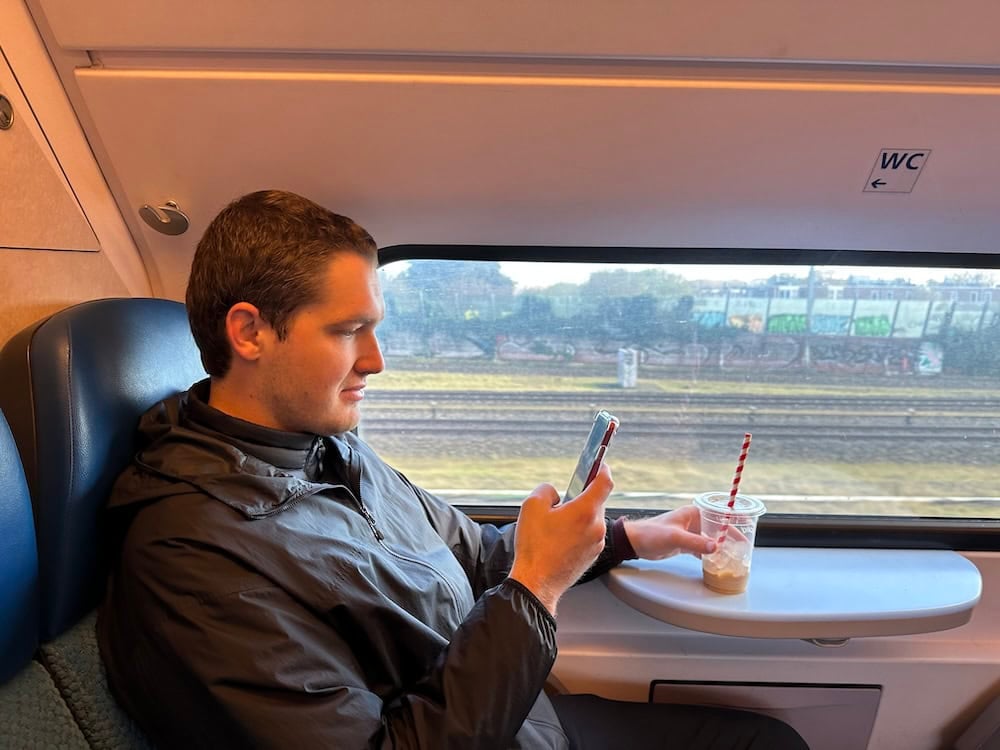
We found it reliable all throughout Europe. The plans fit nomad life. Holafly’s monthly plans start at €45.95 for 25GB, with an Unlimited option at €59.95 per month, hotspot included, and you can cancel anytime.
And with any eSIM purchase at Holafly, you get 1GB of global backup data after your plan expires or it’s canceled. It’s extra peace of mind!
If you’re country-hopping like most nomads, Holafly Plans saves you the SIM-shop routine in every new country.
Transport In Belgrade (How To Get Around)
Public transport in Belgrade is completely FREE for everyone, including tourists, covering all buses, trams, trolleybuses and the BG Voz city train. Belgrade became the first European city of over 500,000 people to abolish public transport fares on January 1, 2025.
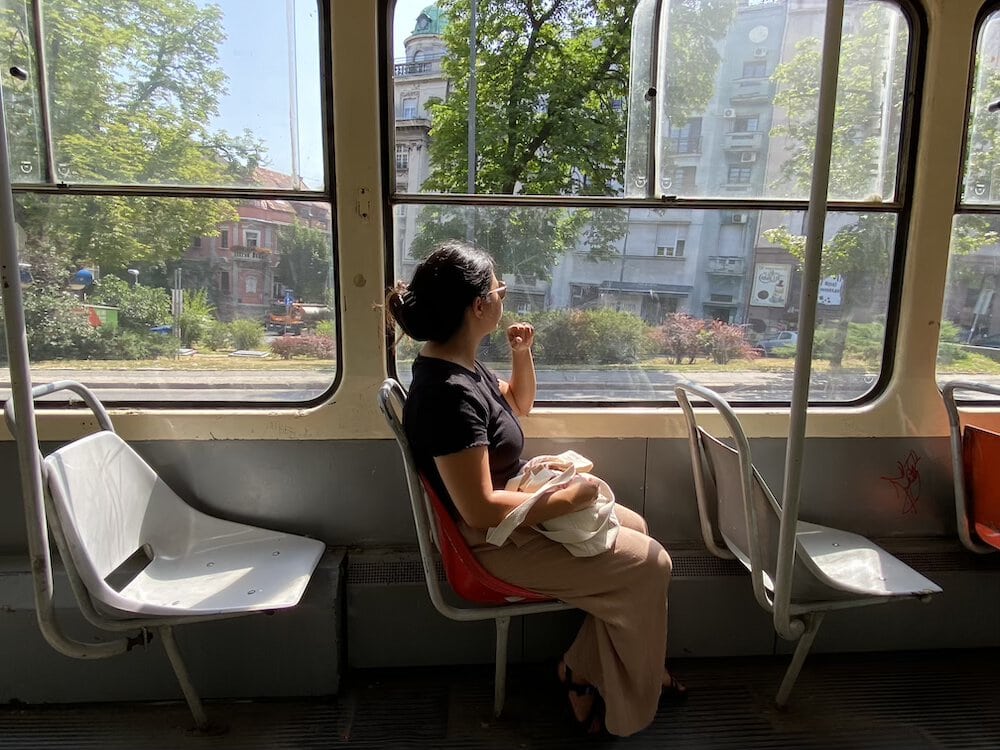
Yes, you read that right.
Free. No tickets, no cards, no apps. You just walk on.
Here’s how we got around:
Walking: Our main mode of transport. Central Belgrade is compact, and Dorćol, Stari Grad, the fortress and the riverside are all easily walkable.
Trams and buses: For longer trips out to Zemun, New Belgrade or Ada Ciganlija, the free network covers the whole city. Vehicles range from brand new to charmingly ancient, but they get you there.
Getting around Belgrade is easy, efficient and about as cost effective as transport gets. When your monthly transport budget is literally zero plus a few Bolt rides, your cost of living drops fast.
ATMs in Belgrade
The best ATMs in Belgrade are operated by OTP Banka, Banca Intesa and NLB Komercijalna Banka, which charge no operator fees on most foreign cards.
Serbia’s currency is the dinar (RSD) and you’ll still need cash for some places.
Follow these three rules:
1. Stick to major bank ATMs. OTP Banka, Banca Intesa and NLB Komercijalna give you the real exchange rate. OTP Banka in particular is repeatedly confirmed fee-free by travelers.
2. Always decline the conversion. When the screen offers to charge you in USD, EUR or GBP, say no. Always choose to be charged in RSD, or the machine converts at a terrible rate.
3. Never touch Euronet machines. They cluster in tourist areas for a reason, and that reason isn’t your benefit.
Our favorite travel money setup?

We travel with Wise and Revolut cards. Both give you close to the real exchange rate, let you hold multiple currencies and make ATM withdrawals cheap. Card payments are widely accepted in Belgrade’s cafes and supermarkets too, so we mostly paid by card and kept a small amount of dinars for bureks and markets.
Grocery Shopping In Belgrade
Grocery shopping in Belgrade is cheap and convenient, with major supermarket chains like Maxi, Idea and Lidl across the city. A weekly grocery shop for two people costs around €60 to €80 ($65 to $87 USD).
The supermarkets here genuinely impressed us.
We loved shopping at Maxi and Idea. Both chains have stores every few blocks in central Belgrade, the prices are reasonable and finding what you need is easy, even with Cyrillic labels on some products.
We cooked around 70% of our meals during our month in Belgrade and it was great. Fresh produce is affordable, local dairy and bread are excellent, and cooking at home is what keeps your monthly costs low here.
One tip: visit a green market (pijaca) at least once. Kalenić market in Vračar is the biggest, and the seasonal fruit and vegetables are better and cheaper than any supermarket.
Things To Do And Activities For Belgrade Digital Nomads
The top things to do in Belgrade for digital nomads are visiting the Belgrade Fortress, taking a free walking tour, seeing the Church of Saint Sava, eating in Skadarlija and taking a day trip to Novi Sad. Most of Belgrade’s best activities are free or under €10.
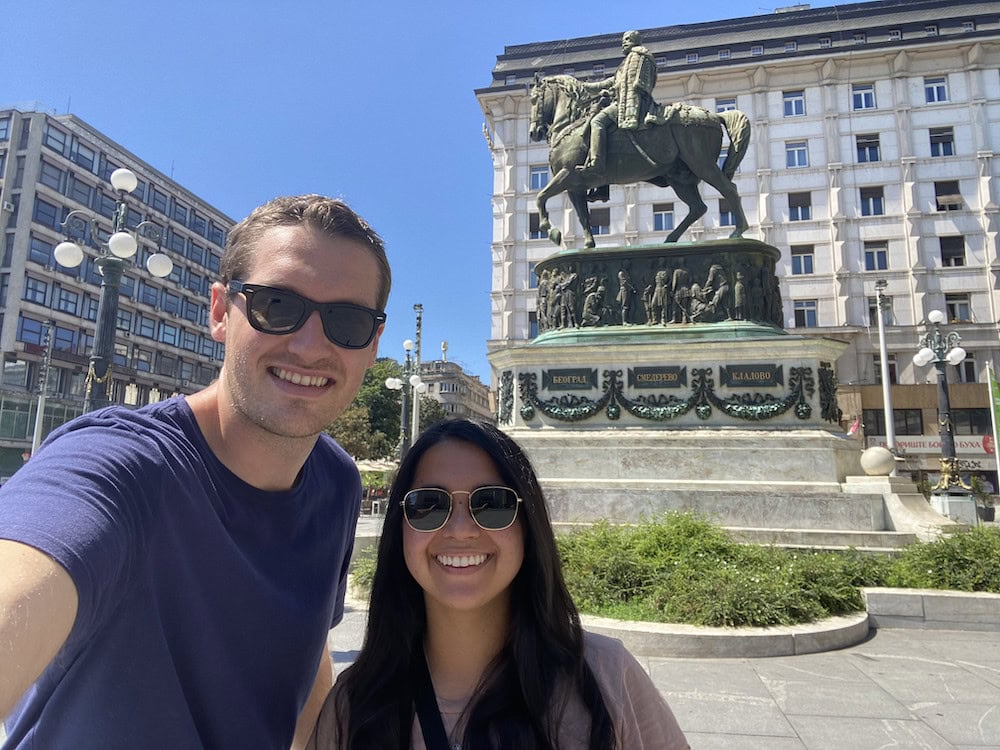
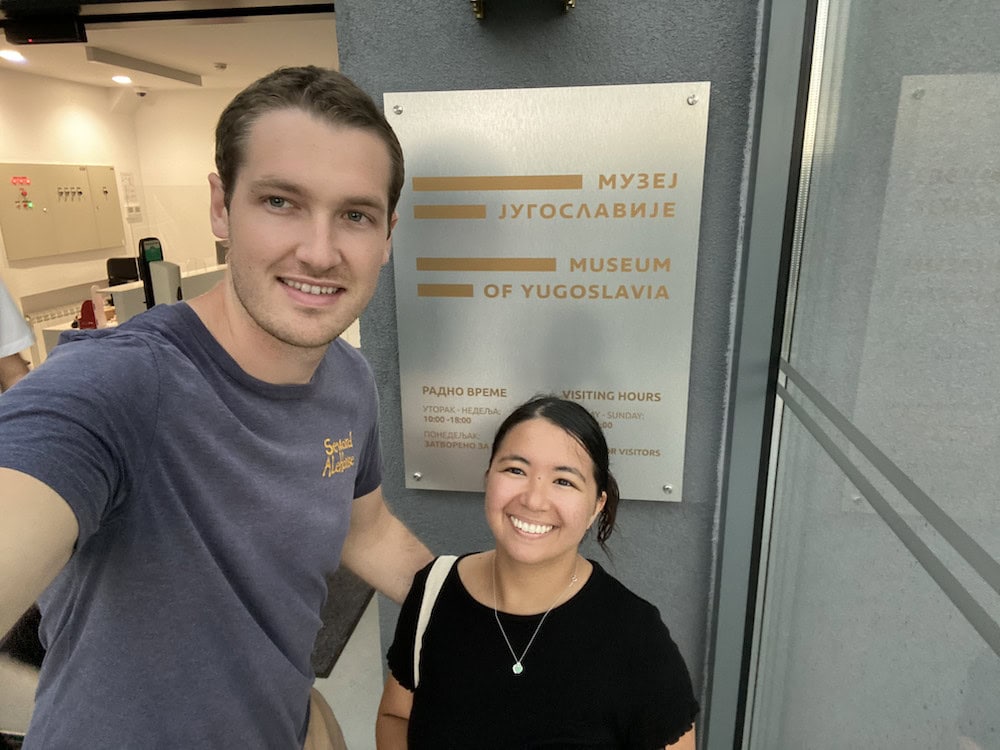
Your weekends here will not be boring. We certainly made the most of it!
Here are the top 5 things to do:
1. Belgrade Fortress and Kalemegdan Park (Free): The city’s number one sight, with sweeping views over the point where the Sava meets the Danube. Go at sunset like the locals do.
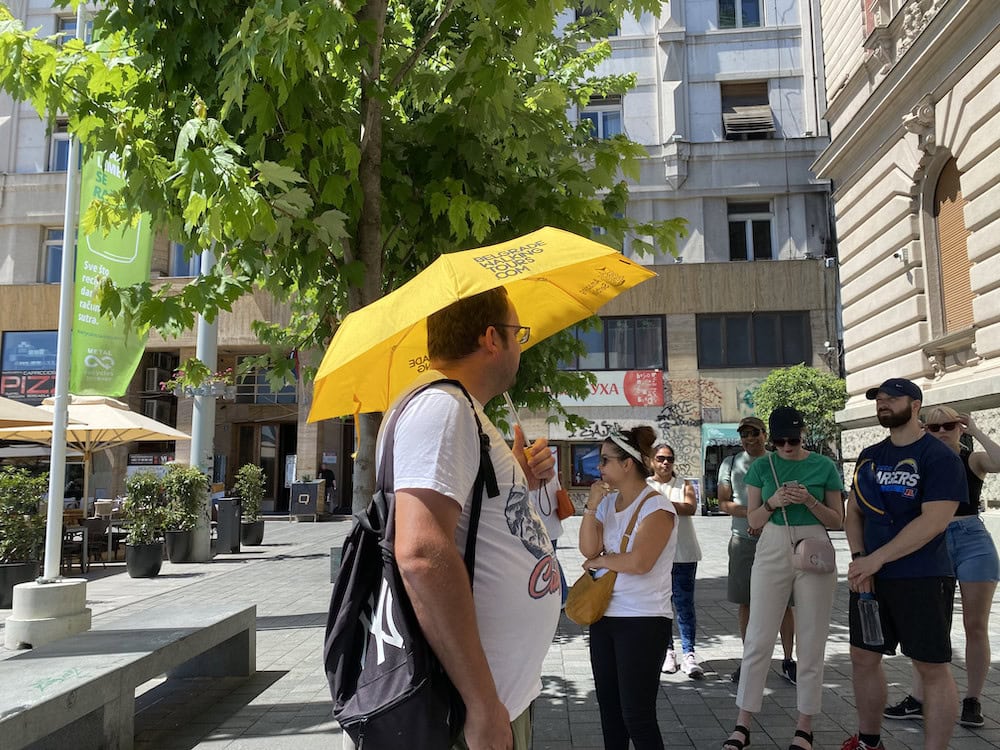
2. Free Walking Tour (Tip-based, €10 or so): The best crash course in Belgrade’s wild history, from Roman times through Yugoslavia to today. Worth doing in your first week.
3. Church of Saint Sava (Free): One of the largest Orthodox churches in the world, with a gold-covered interior that will stop you in your tracks.
4. Dinner in Skadarlija (€15 to €25 per person): Belgrade’s cobbled bohemian quarter, full of traditional kafanas with live music. Order the grilled meats and thank us later.
5. Day Trip to Novi Sad (train from around €5 to €8 each way): Serbia’s beautiful second city, home to the Petrovaradin Fortress.
Our experience:
We did the free walking tour in our first week and it completely changed how we saw the city. The guide unpacked layers of history we would have walked straight past.
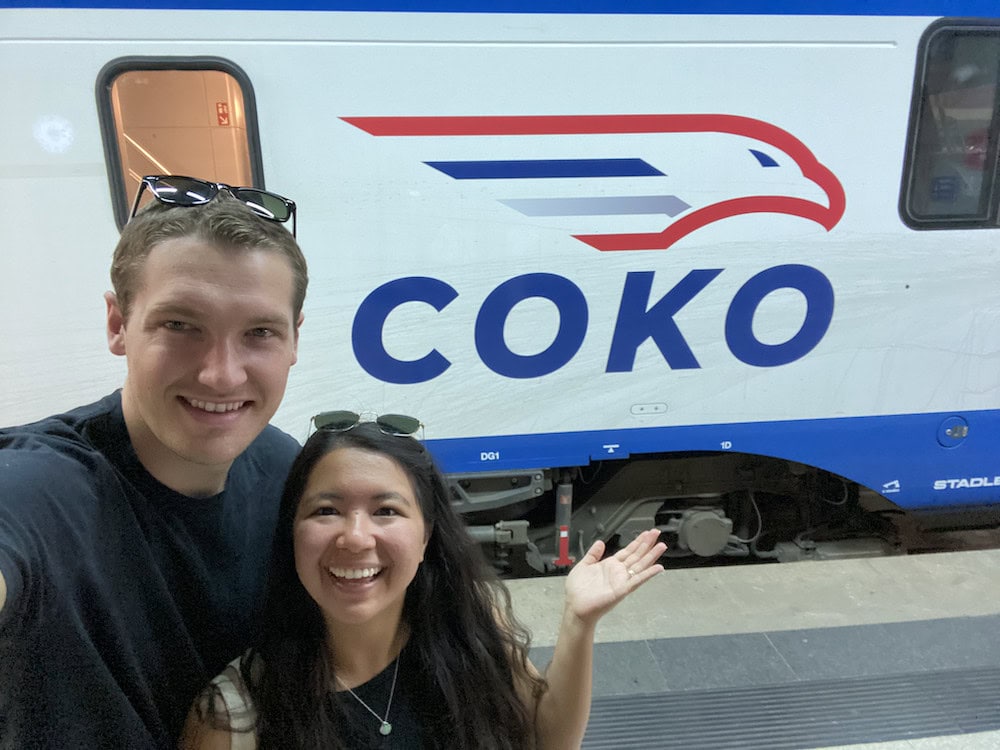
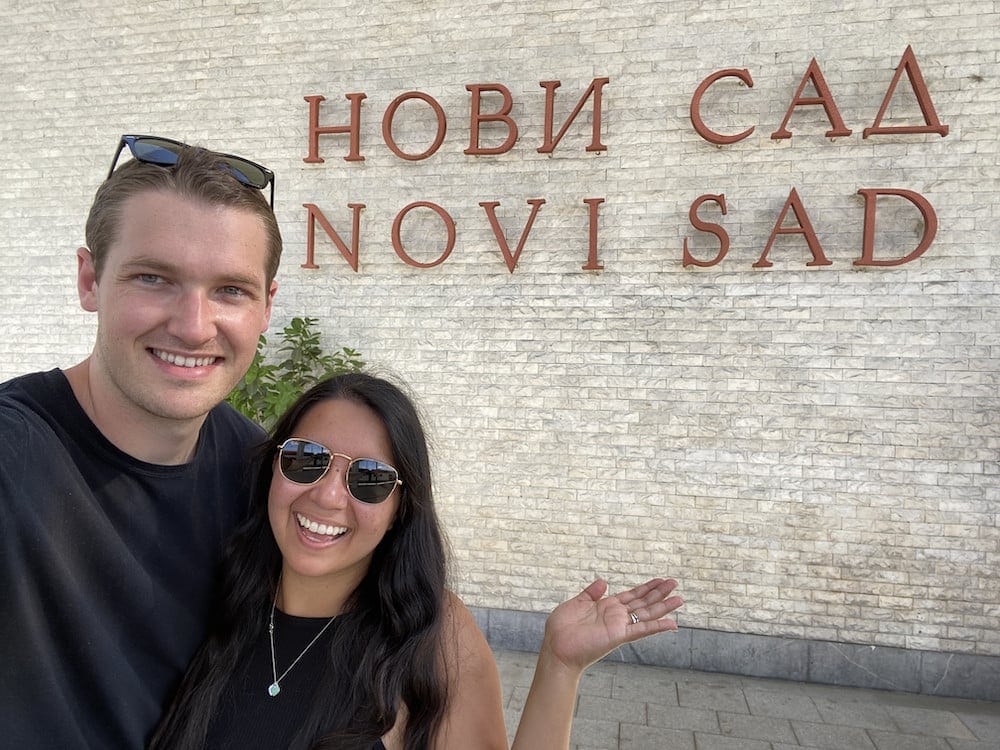
We spent multiple evenings at the fortress, and we took the Soko high-speed train to Novi Sad, which gets you there in around 35 to 40 minutes. Novi Sad has a completely different feel to Belgrade: smaller, quaint, more Austro-Hungarian. It’s the easiest and best day trip we highly recommend!
Where To Work In Belgrade As Digital Nomads
The best coworking spaces in Belgrade are Smart Office Coworking, ICT Hub and Nova Iskra, with hot desks across the city costing around €10 to €20 per day or €120 to €250 per month for a dedicated desk. Virtu Hub in Zemun is the standout option outside the center.
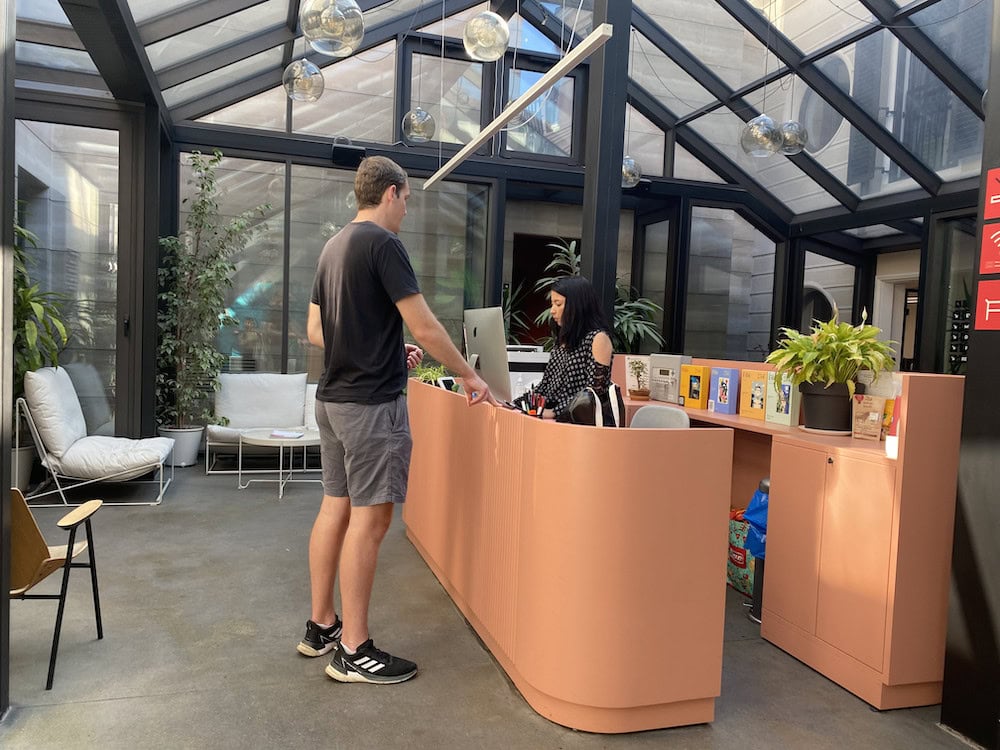
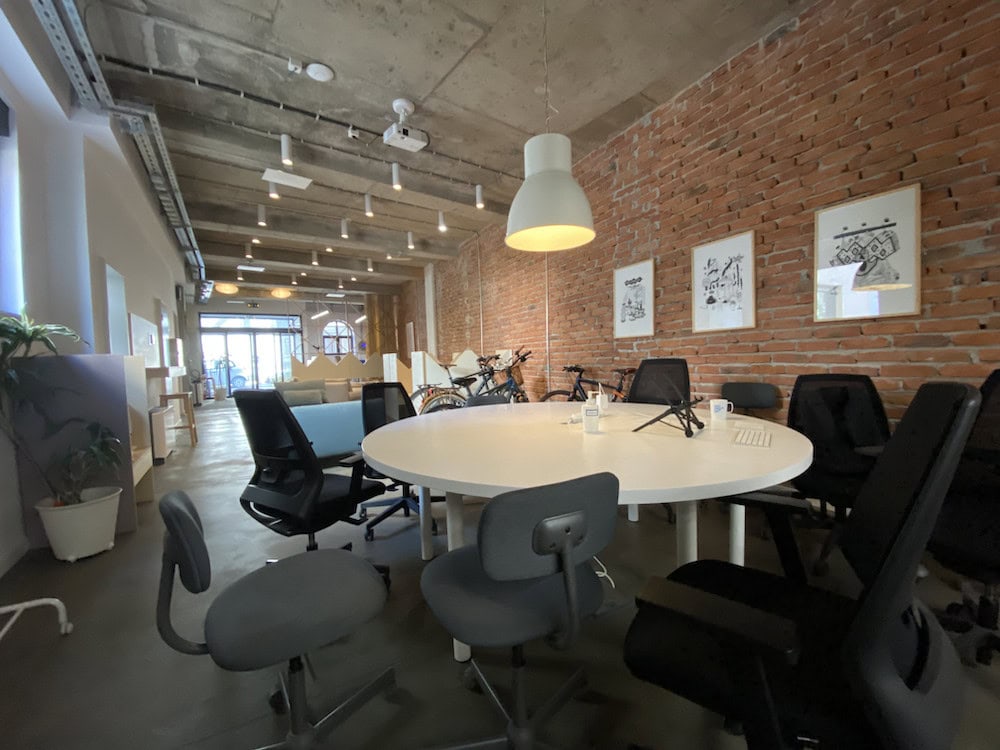
Belgrade has solid places to work. Just not many of them.
Here are the three best coworking spaces:
1. Smart Office Coworking: Serbia’s first coworking space, right on Knez Mihailova in the dead center of town.
2. ICT Hub: A spacious, bright, tech-focused hub that regularly gets named the best coworking option in Stari Grad by nomads.
3. Nova Iskra: A design-led workspace brand with multiple locations, popular with Belgrade’s creative professionals.
And one more worth knowing about:
Virtu Hub in Zemun is a gorgeous industrial-style space with exposed brick, big open-plan floors and a rooftop terrace overlooking the Danube. If you’re based in Zemun, it’s easily your best option, and there’s a second Virtu Hub location in Dorćol too.
Our experience:
We visited and tested several spaces during our month, and the workspaces themselves are great. Fast wifi, good desks, proper coffee.
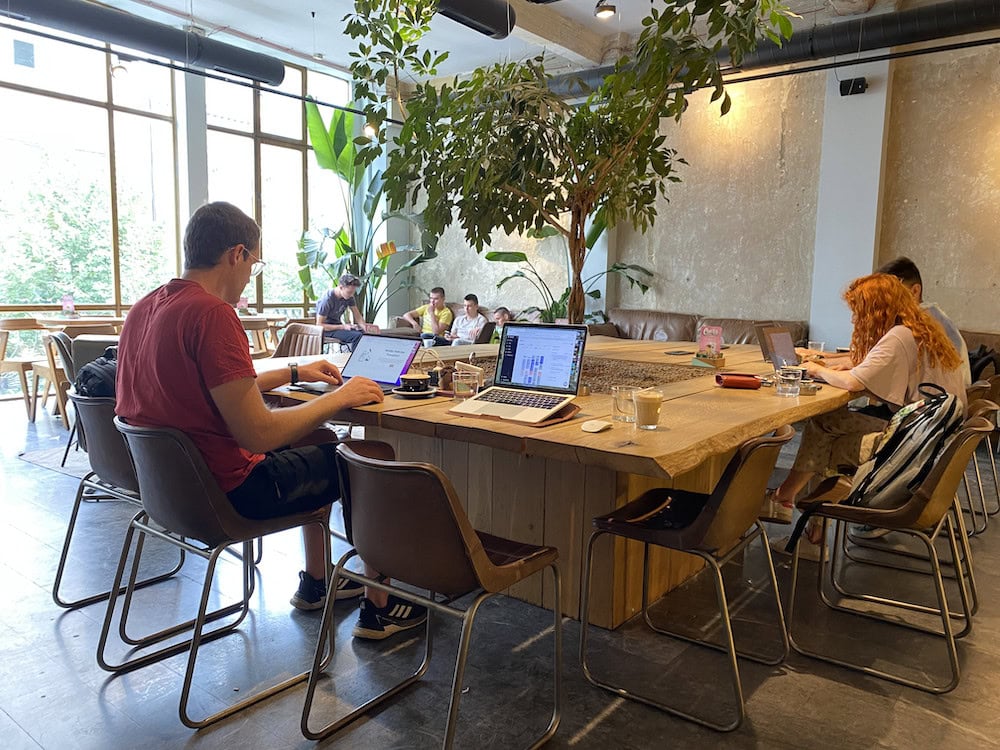
What’s missing is the nomad presence. These spaces are filled with Serbian startups and freelancers rather than international remote workers. Great for getting work done, less great for finding your nomad tribe.
We did a chunk our work from cafes like Kafeterija, and with wifi this fast across the city, that worked perfectly.
Is There A Community In Belgrade For Digital Nomads?
Belgrade does not have a large digital nomad community yet. The city attracts plenty of travelers, but the number of remote workers basing themselves here is still small compared to hubs like Lisbon, Budapest or Tbilisi.
This is Belgrade’s biggest weakness, and it’s why community scored 2 stars in our review.
Our experience:
We met a few travelers during our month, but very few digital nomads actually working remotely. There’s no big Slack group, no packed nomad meetups, no coworking space where half the room is on a laptop for a company three time zones away.
But that doesn’t mean there’s zero events happening:
In fact, there are events every week, like trivia nights, which are a great place to meet people. Language exchanges and social events pop up regularly too, and Serbians are very welcoming and friendly. If you want to connect with other remote workers before you arrive, these digital nomad communities are a good place to start.
Look, here’s the flip side:
Small community means you’re early. Prices haven’t inflated, locals aren’t tired of foreigners and the city still feels like Serbia rather than a nomad theme park. If you want a huge built-in social scene, pick Lisbon. If you want an authentic city with room to grow, Belgrade delivers.
Digital Nomad Travel Insurance For Belgrade
Since foreign visitors are not covered by Serbia’s public healthcare system, digital nomads in Belgrade need travel insurance to stay protected. SafetyWing Nomad Insurance covers travelers in 180+ countries from only $62.72 per 4 weeks for ages 18 to 39.
If an accident, evacuation or serious illness abroad happens abroad it can still cost you thousands out of pocket.
We use SafetyWing Nomad Insurance, and here’s why it works for digital nomads in Belgrade:
It works like a subscription. You pay every 4 weeks and cancel whenever you stop travelling, which fits nomad life far better than fixed annual policies.
You can buy it while already abroad. Forgot to sort insurance before flying to Belgrade? You can still sign up from your Airbnb. The Essential plan covers up to $250,000 in medical treatment, plus emergency evacuation, lost checked luggage and travel delays.
We found it reliable all throughout Europe, especially if you’re traveling to Belgrade…the peace of mind is worth every dollar. You can read our full SafetyWing review for the complete breakdown, or compare more options in our guide to the best travel insurance for digital nomads.
Bottom Line: Is Belgrade Good For Digital Nomads?
Belgrade is a great destination for digital nomads, earning 4 out of 5 stars from our personal experience. The city combines fast internet, low costs, free public transport, genuine safety and a walkable center that most European capitals can’t match at twice the price.
After a month of living and working in this Eastern European city, we’d happily come back.
The value for money alone makes a strong case. A couple can live well for around €2,000 to €2,200 a month, wifi averages around 138 Mbps, transport is free and Serbia’s 90 visa-free days don’t touch your Schengen allowance.
The catch is the community. If you need a big, established nomad scene around you, Belgrade isn’t there yet. You’ll be an early adopter, not part of a crowd.
But that’s exactly why now is the time to go. Belgrade today feels like the nomad hubs of five years ago: cheap, authentic and full of energy, before the rest of the world catches on.
Frequently Asked Questions
Share this article: